Only in Your Arms
The gentle, safe plan for the newborn who won't sleep unless held.
- 60 pages
- 29 illustrations
- 9 printable tools
- Why babies wake when they're put down
- Walk–Sit–Settle transfer and the Gentle Ladder
- Safe contact naps and carriers
- Sleep shifts for parents and when to call a doctor

Your baby sleeps beautifully, as long as they're on you.
Then you try to put them down — and the whole night starts again.
Wakes the moment they touch the bassinet. "Drowsy but awake" fails every time. You're scared of dozing off at 3 a.m. Your arms ache. And somewhere underneath it all, there's guilt. If that sounds like your nights, you're not doing anything wrong — and Only in Your Arms was written for exactly this.
Six areas of practical guidance
From why your baby wakes the moment they're put down to when a doctor is the right call — each area is a chapter you can read in one sitting.
Why babies wake when put down
What's actually happening in the transfer, and why the floor of the crib feels so different from your arms.
Walk–Sit–Settle transfer
A three-step transfer method based on a 2022 Current Biology study, with the timing that makes it work.
Gentle Ladder
Small, rung-by-rung steps toward bassinet sleep, so progress never asks for more than your baby is ready for.
Safe contact naps and carriers
How to nap on you safely, and which carrier positions keep your baby's airway open and supported.
Sleep shifts for parents
How two adults can split the night so somebody is always rested enough to hold the baby safely.
When to call a doctor
Clear signs that sleep trouble is a health question, so you know exactly when to stop reading and ring your pediatrician.
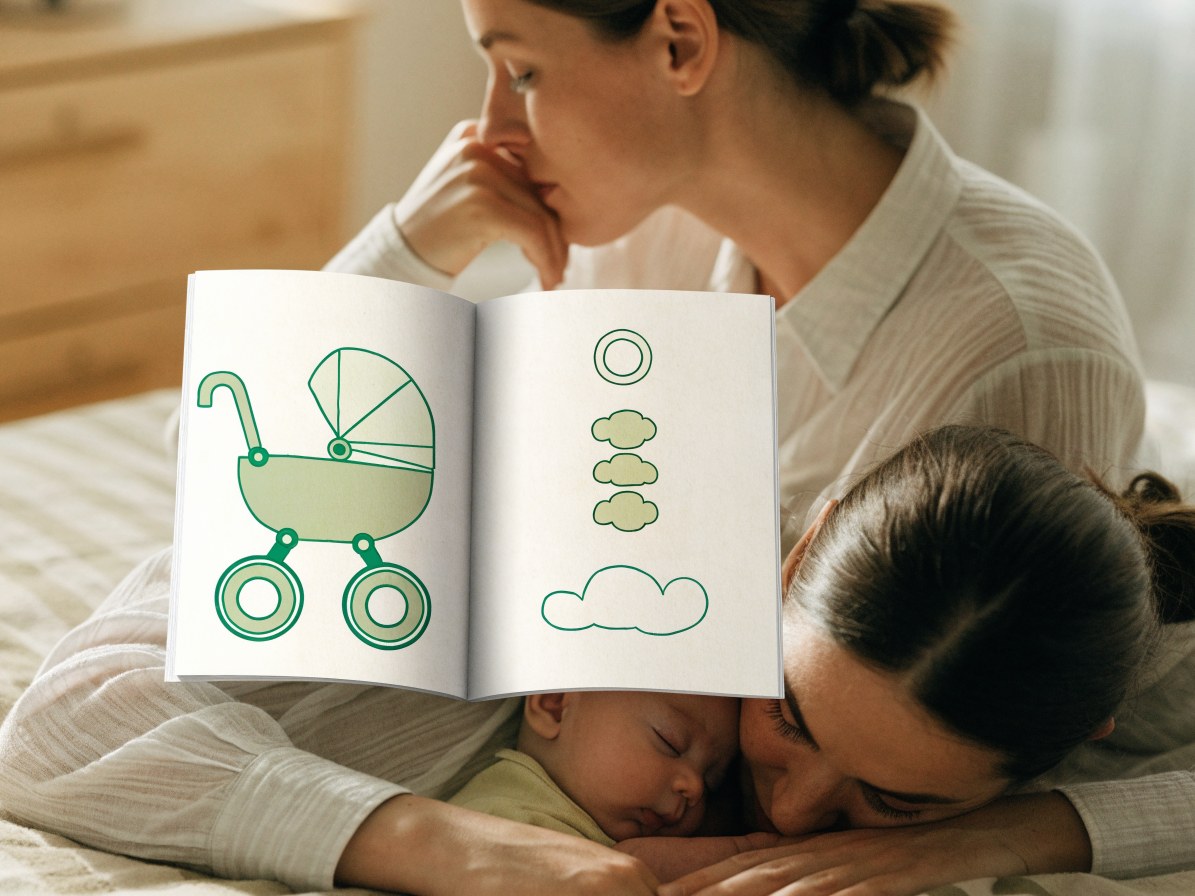
A quiet look at the pages you'll be reading
Before you decide, see how the guide is laid out: short chapters you can read one-handed, plain diagrams of each hold and transfer, and a Quick Start you can open in the middle of the night.
- Quick Start — a settle plan you can follow before sunrise
- Why babies wake when put down
- Walk–Sit–Settle: the transfer built on a 2022 Current Biology study
- The Gentle Ladder toward bassinet sleep
- Safe contact naps and carriers
- Sleep shifts for parents, and when to call a doctor
Instant PDF download
Nine printable tools
Everything you need alongside the reading, ready to print and keep by the cot.
-
Get the newborn wake window chartNewborn wake window chartPrintable · Ages 0–4 months
-
Get the Walk–Sit–Settle transfer checklistWalk–Sit–Settle transfer checklistPrintable · Step by step
-
Get the Gentle Ladder trackerGentle Ladder trackerPrintable · Bassinet steps
-
Get the safe contact nap checklistSafe contact nap checklistPrintable · Safety reminders
-
Get the carrier fit guideCarrier fit guidePrintable · Positioning
-
Get the sleep shift plannerSleep shift plannerPrintable · For two parents
-
Get the night log sheetNight log sheetPrintable · One page per week
-
Get the when to call a doctor cardWhen to call a doctor cardPrintable · Keep by the cot
-
Get the Quick Start one-pagerQuick Start one-pagerPrintable · Read at 2 a.m.
How the advice was built
Based on trusted guidance
Every chapter draws on AAP, Safe to Sleep and Lullaby Trust guidance, so the practical steps you read sit on well-established advice about infant sleep and safe sleep spaces.
27 linked sources, with evidence labels
The guide cites 27 sources you can open yourself, and each recommendation carries an evidence label so you can see how firm the footing is before you act on it.
No cry-it-out
Nothing in these pages asks you to leave your baby to cry. The steps are gradual and contact-first, built for parents who want a gentler route to the bassinet.
This is educational guidance, not medical advice — written to help you understand what's happening at night and try gentle, safe steps at home.
When something feels beyond a sleep question, the guide tells you plainly: health concerns belong with your pediatrician, and that section is never far away.

Questions about the guide
Who it is written for, how it is grounded, and what it does not promise. Answered plainly, so you can decide whether it fits your family.
Only in Your Arms is written for parents of babies aged 0 to 4 months — the newborn weeks when sleep is short, frequent and held. The routines and settling steps are built for that stage rather than for older babies.
No. The guide does not use cry-it-out. It works with gentle, responsive settling — the Walk–Sit–Settle transfer and the Gentle Ladder — so you stay close to your baby rather than leaving them to cry alone.
No. The guide is educational, not medical. It is based on AAP, Safe to Sleep and Lullaby Trust guidance, with 27 linked sources and evidence labels throughout, but it does not diagnose or treat. If you have a health concern about your baby, talk to your pediatrician.
It is an instant PDF download. Buy the guide, and the file is yours straight away — read it on your phone at 2 a.m. or print the pages you want to keep by the cot.
Yes. The settling steps, contact nap guidance and sleep shift patterns are written to work whether your baby is breast-fed, bottle-fed or both, without asking you to change how you feed.
No, and no honest guide can promise them. Every baby is different, and the guide gives you a clear, gentle plan to work through rather than a guaranteed outcome. It is educational guidance, not a substitute for medical advice — for any health concern, see your pediatrician.
Educational, not medical
Only in Your Arms is practical guidance for everyday parenting questions, not a diagnosis or treatment. If you are worried about your baby's health, breathing, feeding or weight, contact your pediatrician — the guide will tell you when to make that call.
Read the Quick Start at 2 a.m. and have a plan before sunrise.
A gentle, safe plan for the newborn who won't sleep unless held — written for parents of babies 0–4 months, evidence-informed and free of cry-it-out.
Educational guidance only — not medical advice. For health concerns, talk to your pediatrician.